
- Three in five (62%) of university students are planning on driving back to University this September and for one in six (16%), the journey will take more than two hours.
- However, one in four (27%) students admit to driving for four hours without a break and over half (65%) would rather complete their journey without a planned stop.
- National Highways and Halfords launch their T.R.I.P. partnership to offer advice and help drivers prepare for long journeys, including encouraging them to plan in rest breaks to help stay refreshed and keep themselves and other road users safe.
With more than three in five (62%) students planning to drive to university this September, National Highways and Halfords are encouraging drivers to prepare their vehicles and to take regular breaks to stay refreshed, alert and safe on the road. This comes as one in four (27%) of students admit to driving for four hours without a break, despite guidance from National Highways to stop for at least 15 minutes of rest every two hours.
The polling, commissioned by National Highways and Halfords, reveals that three in five (65%) students driving back to university would rather complete the journey without stopping at all, suggesting drivers are underestimating their ability to continue driving safely even when tired.
Although drivers aged 17-24 account for just 7% of UK licence holders, safety data shows they are involved in 24% of road traffic collisions in which someone is killed.* The T.R.I.P. campaign aims to ensure all drivers have safer and more stress-free experiences on the road, urging student drivers to Top-up, Rest, Inspect and Prepare before travelling.
Alarmingly, over a third (35%) of students don’t know how to carry out basic car maintenance checks themselves, which is why National Highways and Halfords are reminding drivers to ensure they are prepared for journeys including planning the route to include breaks, checking tyre pressure and topping up oil and screen wash – all of which can be found at
Halford garages.
Colin Stevenson, Road Safety Information Lead at National Highways, said:
“Travelling to university can be exciting, and for some, it’s the first time travelling without their parents on a long road trip. But fatigue behind the wheel can be deadly and something that drivers should take seriously by planning in rest stops of at least 15 minutes every two hours. That’s why we’re encouraging all drivers to follow our advice by planning ahead, taking regular breaks and staying refreshed. We know that many breakdowns can be prevented with some simple vehicle checks our T.R.I.P checklist – Top-up, Rest, Inspect, Prepare – serves as a simple yet effective reminder to ensure your vehicle is roadworthy and you’re ready for any journey.”
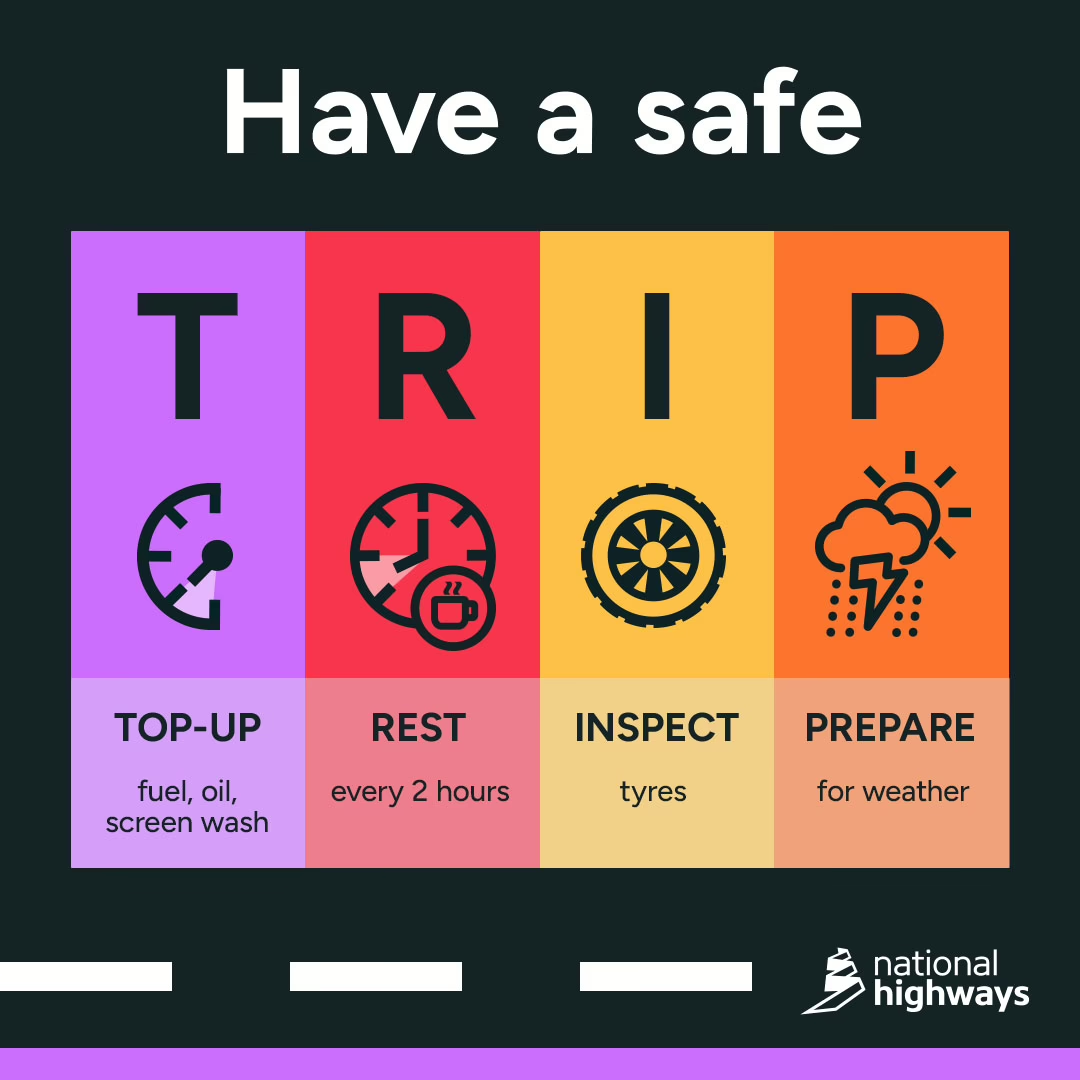
To address these risks, National Highways and Halfords are promoting the T.R.I.P. acronym – a simple guide to help students prepare for long journeys:
- Top-up: Check essential fluids like oil, screen wash, and coolant.
- Rest: Take breaks every two hours to stay alert and avoid fatigue.
- Inspect: Check tyres, lights, and wipers before setting off.
- Prepare: Check the weather forecast and your route in advance of setting off.
Adam Pay, Managing Director of Garages at Halfords, said:
“We want every student to feel confident and safe as they set off for university this September. Long journeys can be exciting but also demanding and taking a break every couple of hours is one of the simplest and most effective ways to stay alert on the road.
At Halfords, we’re here to take the worry out of car checks, whether that’s tyres, oil, or screen
wash, so drivers can focus on enjoying the journey ahead. With a few simple preparations, students can make sure both they and their cars are ready for the road.”
For more information on the T.R.I.P. campaign and details on different rest stops along major roads, visit: https://nationalhighways.co.uk/road-safety/trip/.
For vehicle supplies and services, visit: https://www.halfords.com/.
