Artificial Intelligence – the term that only made sense in the pages of a sci-fi novel just years ago, can now be found front and centre of your average everyday business plan. The future of technology has arrived, and it’s infiltrated our workplaces, our hobbies and even our way of thinking. And it’s not just invoice generation and content creation – one of the many sectors that AI inhabits is animation, throwing up questions around ethics and artistic integrity. So does AI have a place in the world that gave us the likes of Mickey Mouse, Toy Story and The Simpsons? And what does it mean for the modern animator to have a machine that learns at the speed of light doing a job that once took countless hours to complete?
Craft Rooted in Emotion, Expression and Character
As a craft so inherently rooted in emotion, expression and character, it’s hard to imagine exactly where the ‘artificial’ part of AI could slot in. Traditionally, people practising animation would spend days on end studying, drawing, erasing and drawing again – meticulously flicking through frames to create the illusion of life on the page – and it was a skill afforded only to those willing to put the practice in. But today? Animation can be as simple as starting with one image (drawn or generated), clicking a button and having the AI bring it to life before your eyes. Pretty impressive – if you don’t look too closely. And in a world of commerce, it makes complete sense to utilize a tool that turns the once painstaking process into an instantaneous one. But it’s the potential erasure of that painstaking process that makes the topic one that’s so hotly debated.
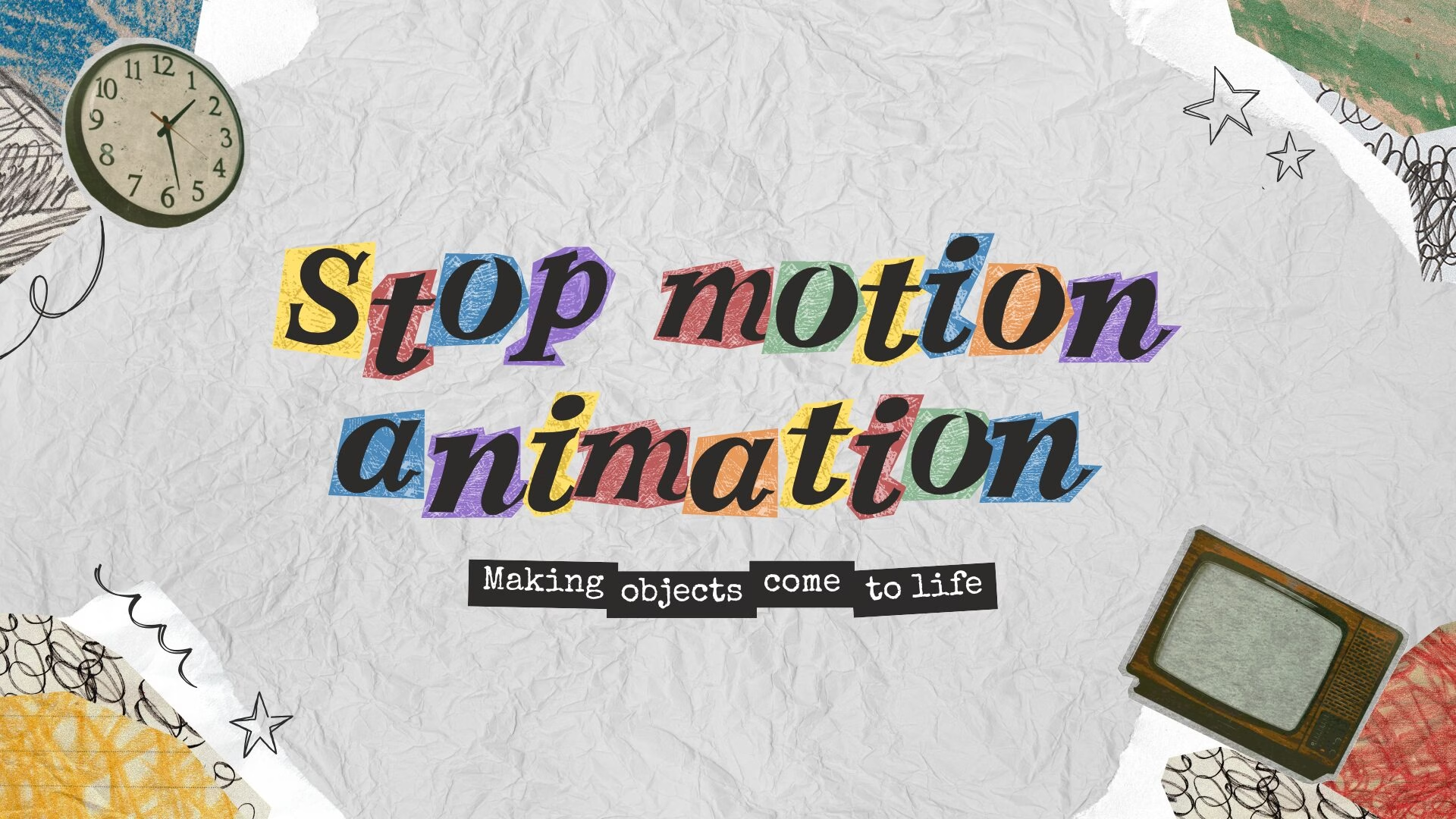
To try and hold onto the days of classic animation is not for the sake of nostalgia alone. The origin of moving image dates back to prehistoric cave paintings, with figures brought to life by the flickering effect of firelight – long before Walt Disney was a twinkle in his mother’s eye. But it’s the lived experience, the human touch and the embodiment of the hand-crafted character that animation purists care most about – elements which are near impossible for a computer to recreate.
And then there’s the uncertainty around authorship. Many AI tools are trained on existing IP, whether in the form of artwork, photography or in this case, animation. The more you use AI software to supplement your practice, the more the lines become blurred about who actually created the work you’re putting out – opening the doors for potential copyright infringement and undercutting the hard work of others in the industry.
Perhaps the most obvious counter-case for the use of AI in animation, however, is the threat to loses to jobs in the sector. From a business point of view, it’s a time and money saver that’s hard to ignore – but what does that mean for the thousands of trained animators, character designers, background artists and compositors currently doing the work? Only time will tell – but it should be a serious consideration for anyone looking to commission animated works in the near future.
Why Choose to use AI?
So, why would you choose to use AI, given that the list of cons sounds significantly gloomy? There’s an argument to be had in breaking down the barrier to entry – meaning that anyone with a story to tell can write a few prompts and translate their ideas for the screen whether they’re able to draw or not. AI-generated content doesn’t rely on traditional tools like clay, pencils or paper, and it offers a platform for diverse voices to create work on a more level playing field, regardless of the equipment they have at hand.
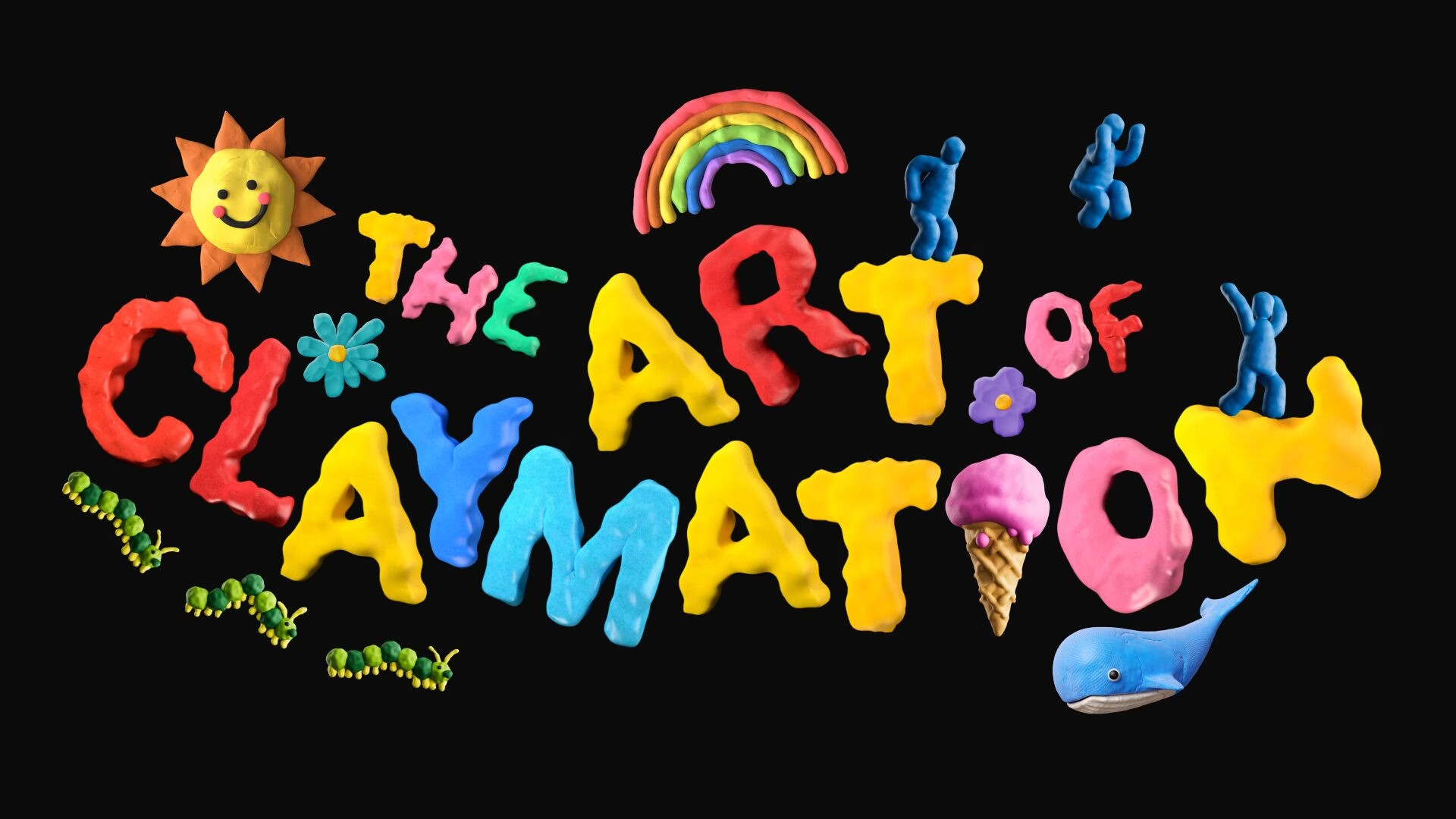
Not only that, it could be said that with AI doing some of the more monotonous tasks like in-betweening and key framing, the animator may be freed up to focus on more creative ‘human’ endeavours. In choosing to collaborate with an AI tool in the way that you would a colleague, artists may forge and discover new techniques, styles and approaches to storytelling that we haven’t seen before. With more time on side, the possibilities of what can be achieved in that extra time are enticing – especially to those funding the work.
Ultimately, the question isn’t about whether or not AI has a place in the world of animation – because the fact is, it’s already there, and it doesn’t seem to be going away any time soon. The conversation now is about how we use that AI as a part of our practice, and how to do it ethically. With proper boundaries, artist accreditation and compensation, collaboration over dependence, human input and oversight, the tool in question could lead to some wonderful work. But the instinct to create? The spark of an idea triggered by beauty out in the world…the desire to get something off your chest in the form of images, sound and movement? Those are the things that an audience can feel when watching good animation. Those are the things that resonate. And most importantly, those are the things that can never be manufactured.
Credit: Written by Lisa Kenney – Senior Careers Features Editor
