
Last year, Netflix’s latest animated movie K-Pop Demon Hunters graced our screens and almost immediately became an all-time hit. The film pulled in over 266 million views in its first 91 days and has gone on to receive a limited theatrical run, a #1 billboard spot for its original song Golden and is now Netflix’s most watched movie of
all-time. Pretty impressive, to say the least.
It’s fascinating to consider that this could have major implications for the future of K-Pop as a genre, animated movies and even the trajectories of major streaming services. With Demon Hunters already rumoured to have multiple sequels and spin-offs in the works, we saw it fit to explore how its unfathomable rise mirrors the global ascent of K-pop – shaped by both cultural evolution and fan-driven momentum, but also extremely strategic storytelling.
Let’s first take a few steps back and look at K-Pop as a music genre, as well as its initial steps toward worldwide acclaim and the film medium.
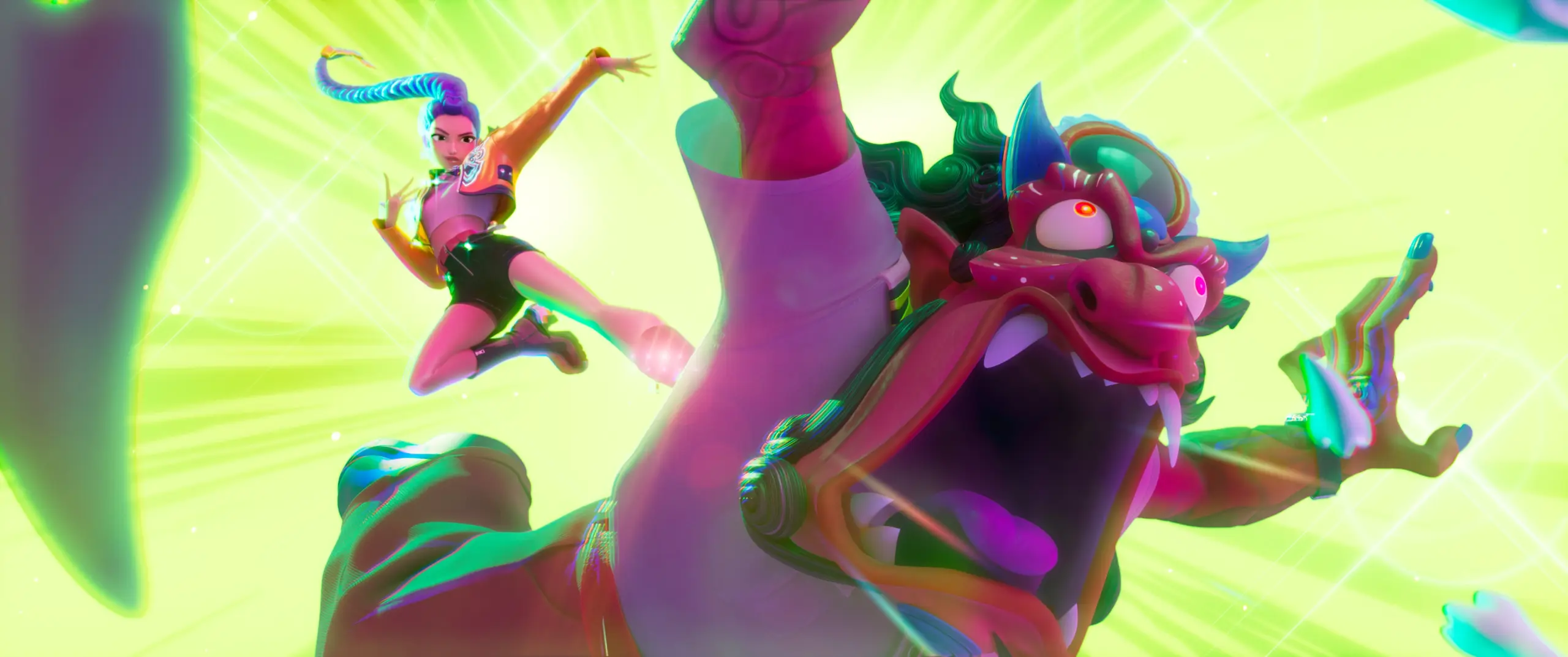
THE INFLUENCE OF K-POP
K-Pop (short for Korean pop music) started building momentum in South Korea in the 1990s, with up-and-coming artists like Seo Taiji and Boys, who blended genres like hip-hop and rock with Korean lyrics and themes. In the decades to follow, the genre evolved immensely, with idol groups such as HOT, TVXQ, and BOA shaping what would become the modern K-Pop industry – defined by it’s absurdly high production values, intense training systems, and spectacularly coordinated group performances.
Come the late 2000s and early 2010s, K-Pop wasn’t just a regional phenomenon anymore… acts like BIGBANG, Girls’ Generation, and Super Junior began cultivating international fanbases, mostly across Asia. Then came the genre’s true global breakout, led by iconic groups like BTS, EXO, and BLACKPINK, who didn’t only top global charts but also sold out arenas worldwide – becoming household names far beyond South Korea. Now, it was across the world.
Naturally, a significant amplifier of this global boom was the internet. K-Pop embraced digital social platforms earlier and more tactically than most of its Western counterparts. YouTube, Twitter, and later TikTok (Musical.ly at the time) became
integral tools for building fan communities and spreading content at an absurd scale.
The K-Pop industry’s focus on polished visuals, continuous storytelling through music videos, and caring fan interaction turned listeners into highly engaged superfans – many of which actively promoted their favourite artists across many linguistic and cultural barriers. These were aptly labelled “Stans”, named after an Eminem song discussing obsessive fans.
As K-Pop’s fascinating influence spread, so did its presence in other genres of media.
Popular songs began to find their way into television shows, variety productions and brand partnerships around the world. Film, on the other hand, remained a fairly untapped space for some time. While there have been idol-led films and performance documentaries – such as BTS: Burn the Stage and BLACKPINK: The Movie – these features primarily served existing fans rather than making any attempt to draw in new ones.
What’s been missing until recent times is a truly cross-medium storytelling epic – one that takes the energy, aesthetic, and cultural dominion of K-Pop and funnels it into a fictional cinematic form that can resonate with general audiences as well as die-hard fans. Think like an MCU, but with K-Pop. That’d be pretty neat, no? Well, luckily, that missing piece may finally have arrived.
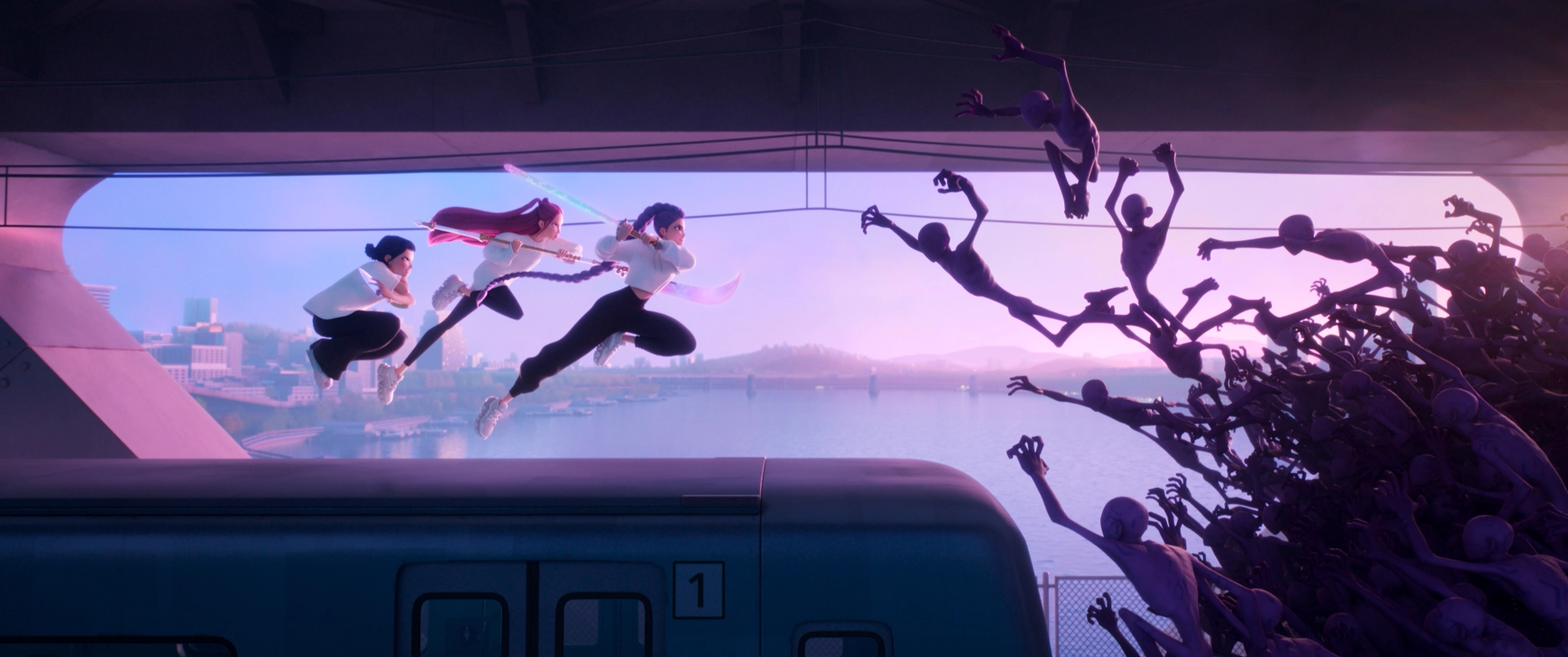
THE SUCCESS OF DEMON HUNTERS
The recent hit animation film K-pop Demon Hunters has become a cultural phenomenon, rewriting the rules for modern entertainment. Its success is a multifaceted story of digital dominance, chart-topping music, and a sophisticated
creative strategy that has resonated globally. The phenomenal success of Netflix and Sony Pictures Animation’s K-pop Demon Hunters has really shown the strength of its ability to gauge streaming and theatrical audiences. It’s the first-ever Netflix film to top the U.S. box office. Whilst I’m not a specific fan of this franchise, I can admire its success and how it has shown potential for original streaming content that’s also able to find success at the box office.
The film’s critical and audience reception was overwhelmingly positive, reflecting its widespread acclaim. It holds a near-perfect 97% critics’ score and a 91% audience score on Rotten Tomatoes, setting a new benchmark specifically for Netflix’s original film productions and highlighting its exceptional quality within the streaming platform.
Critics praised its “uniquely vibrant” and genre-blending animation style, which drew visual influence from Sony’s acclaimed Spider-Verse films, noted for their innovative animation techniques and dynamic visuals. The film’s success translated into immense online engagement, sparking a surge of cosplay, fan art, and dance recreations across
social media platforms like TikTok and Instagram, thereby amplifying its cultural impact and reach beyond traditional audiences. Demon Hunters surprisingly became the ‘most watched’ original title in Netflix’s history, with an astounding 325.1 million views in its first 91 days. It beat previous record holders set by Red Notice and even the immensely popular debut season of the K-drama Squid Game. The studio gave the film an exclusive 2-day theatrical release, which amassed $19.2 million, a figure that is more than impressive, especially considering that some theatrical releases didn’t succeed this year.
The animated film has taken the world by storm, and its soundtrack was a significant selling point, which undoubtedly contributed to its overall success. Due to its record-breaking success, a sequel to K-Pop Demon Hunters is currently in development. There have been reports that Netflix and Sony are in talks about a sequel. Additionally, there are reports that a
short film, possibly serving as a prequel to the main movie, is also in development. This wouldn’t be a surprise, and indeed, it would be a good move for Netflix and Sony to proceed with more content for this juggernaut of entertainment.
Written by Shamoon Saeed and Jayden Robinson
