
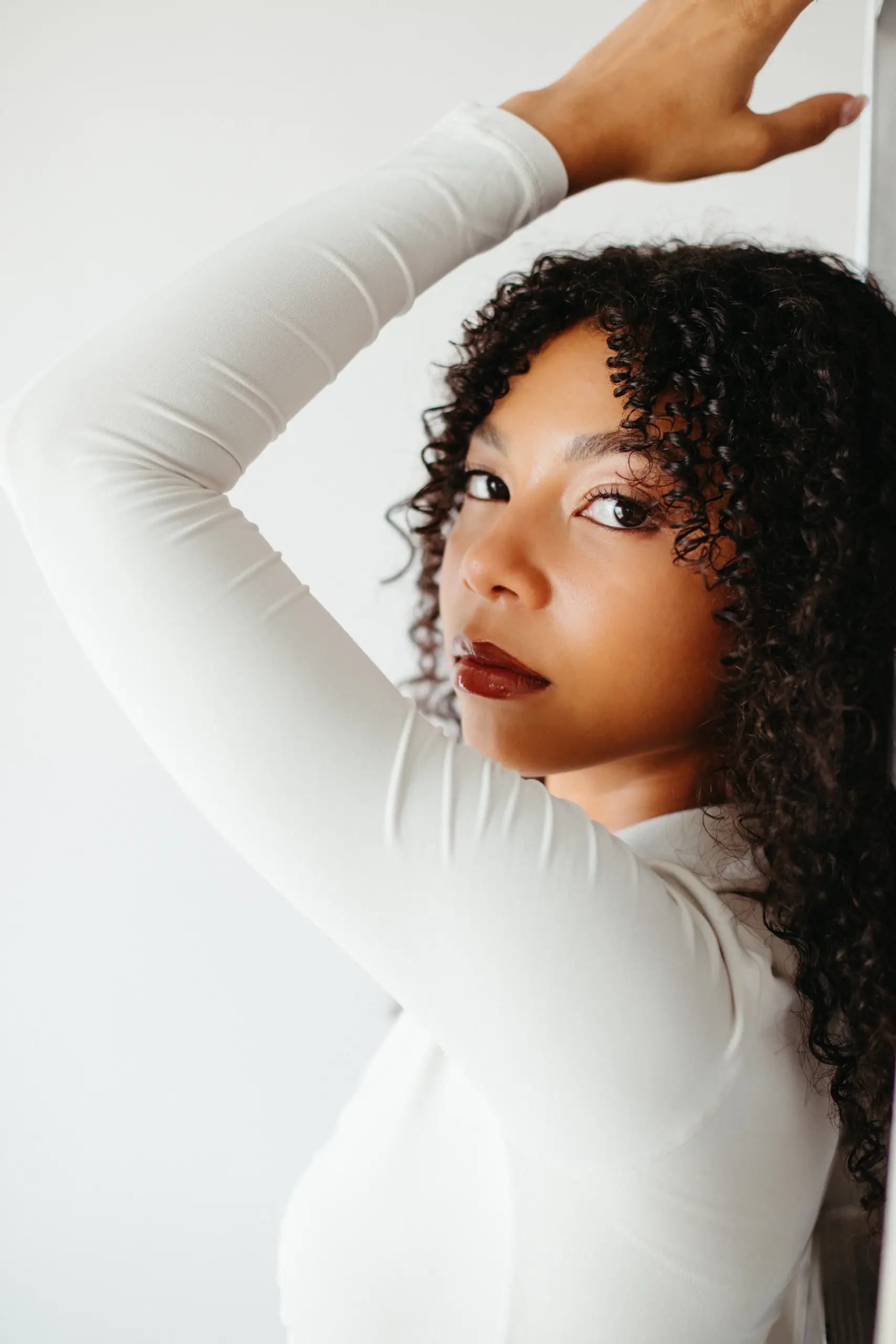
When Canadian actress and singer-songwriter Simone Miller walked onto the set of The Institute – MGM+’s eight-part Stephen King adaptation – she knew within minutes that this one felt different. From a young age, Simone has loved performing and has sung for as long as she could speak. But when it comes to standout moments, her latest venture feels truly special.
“It’s definitely my favourite role that I’ve gotten to play thus far in my career,” says the actress. “I felt instantly connected to Kalisha when I got the audition.”
In King’s spine-prickling world, a group of abducted kids with psychic abilities are exploited inside a shadowy facility. What grabbed Miller wasn’t the supernatural hook; it was the human one. “Their powers are second to their personalities,” she tells Student Pages. “What carries them through is that they dare to still hope in a place so devoid of it. They cling to one another for dear life, and it’s friendship and love that preserves their innocence and keeps them human.”
It’s a striking description from a 20-year-old who is fast becoming a standout of Hollywood’s next wave. Best known to many for Run the Burbs (Hulu) and Detention Adventure (Max), Miller now anchors The Institute as Kalisha Benson – “sarcastic-but-friendly,” as the brief says – quietly heroic in the show’s most harrowing moments. Off set, she’s a singer-songwriter gearing up to release new music in October and a film student who’s thinking hard about the industry she’s entering. Sitting down with Student Pages, Miller talks craft, career, and what comes next.
 Finding her voice
Long before she was an actor, Simone was singing. “I was a singer long before I was an actor,” she says. “I actually started acting because I was really shy, I couldn’t even hold a conversation.” Her mum nudged her into classes “to bring her out of her shell,” and Miller says something clicked. She fell in love – “with being on set before I necessarily fell in love with my favourite genres or directors. I loved the process.”
That process-mindedness is everywhere in how she approached Kalisha. Before the scripts arrived, she devoured King’s novel. “I ploughed through the book and could not put it down,” she says. What resonated wasn’t gore or spectacle; it was the story’s refusal to damsel its children. “We aren’t waiting to be saved,” she says of the Institute kids. “We know the only way we’re gonna get out of here, if we do, is by rolling up our sleeves and doing this together.”
It felt generational, too. “It felt like a nod to Gen Z,” Simone says. “We get poked fun at, but we’re insatiable in systems of oppression and with authority that abuses power. We’re more than capable of achieving our goals, regardless of being younger.” In Kalisha, she found both mirror and challenge: a character whose steel comes not from telekinesis but from stubborn compassion.
Simone gravitates to roles that stretch her. Drama and psychological thriller may be her “bread and butter,” but she enjoys both ends of the casting spectrum – the characters who feel familiar and those that are far removed. “It’s really interesting to find that perspective,” she says. “I love the challenge.”
And if a job throws up nerves, Simone has one golden rule. “Whatever’s meant to find you, will,” Miller advises. “I go into any audition thinking: I’ll do my best. If it works out, great. If it doesn’t, it’s making room for another opportunity that’s better suited for me.”
The art of balance in a digital age
Playing Kalisha while studying film and writing songs meant living multiple creative lives at once. Balance, she admits, is a moving target. “I’m still figuring it out every day,” she says. “Depending on timelines, I’m honing in on acting or music. But you always need to carve out time to stay grounded in your family and friends. They keep you human. Interviews, carpets, photo shoots – it doesn’t feel human to me sometimes.” The antidote? Normality. “Going back to my friends and family to goof off and be stupid, to be a kid, is important.”
She also protects a slice of each day that’s just for her. “Find activities that are yours and not something you owe your audience,” says the actress. For Miller, that’s the gym. “I love working out. It’s a great outlet to focus on my person and my physicality in a way I don’t have to share with anybody else. An hour where I can focus on one thing instead of the million creative things circulating.”
When asked about her relationship with social media, Miller tells us she’s pragmatic and wary. “It’s a great tool to get eyes and ears on your projects,” she says. “But it’s not my favourite thing in the world. It’s become such an integral part of music and film that even casting directors are like, ‘if you don’t have social media, we don’t have a way of seeing who you are’.” Her critique isn’t about consumption; it’s about distortion. “It feels ostentatious, performative. Social media is fake at the end of the day, it’s never a true representation of a person. It paints such a singular picture of multifaceted individuals. You don’t see my bad days.” Still, she’s grateful: “It’s given me opportunities and helped me grow my audience. I’m so grateful for my supporters.”
That balance extends to how she wants the industry to evolve. “I’d love for it not to be so contingent on the story around the story – the hook, the off-screen romances,” she says. “I miss when you loved a film for the film. Not that support and buzz aren’t amazing; they are. I just wish it didn’t have to be so drama-encircled.”
Representation is central to that shift, on both sides of the lens. “You step onto the set and it’s a lot of straight white men,” she says. “Some stories require a gentler touch, or a perspective only certain groups can tell because they’ve lived it. When those stories are in hands that don’t identify with them, it can be frustrating. I’d love to see a shift.”
When asked about her dream role, Miller doesn’t hesitate. “Anything in the realm of Memento,” Simone says. “It’s my favourite film – genius storytelling, Guy Pearce’s performance. I want something I can really sink my teeth into, that challenges me in a new way.”
As for what’s “big” in music right now, she’s energised by breadth. “I love that we’ve given grace to genres that weren’t everyone’s favourite a few years ago: country music and R&B are making their way back into pop mainstream.” But when it comes to her own sound, she steers away from mimicry. “Don’t emulate artists that already exist to a T. People ask, ‘Who do you sound like? Who do you want to be like?’ But that artist already exists. Take inspiration, sure, but if you create a song that already exists and change three lyrics and two chords, people won’t identify with it, they’ve heard it before.”
Her advice for anyone wanting to start out in music is simple and pointed: “Say what you actually want to say. Hold on to your independence. That’s what will draw people: ‘What’s this girl doing? It’s different.’ Be consistent. It’s a slow boil. If you’re true to yourself, it’ll come to fruition.”
 The courage to tell the whole story
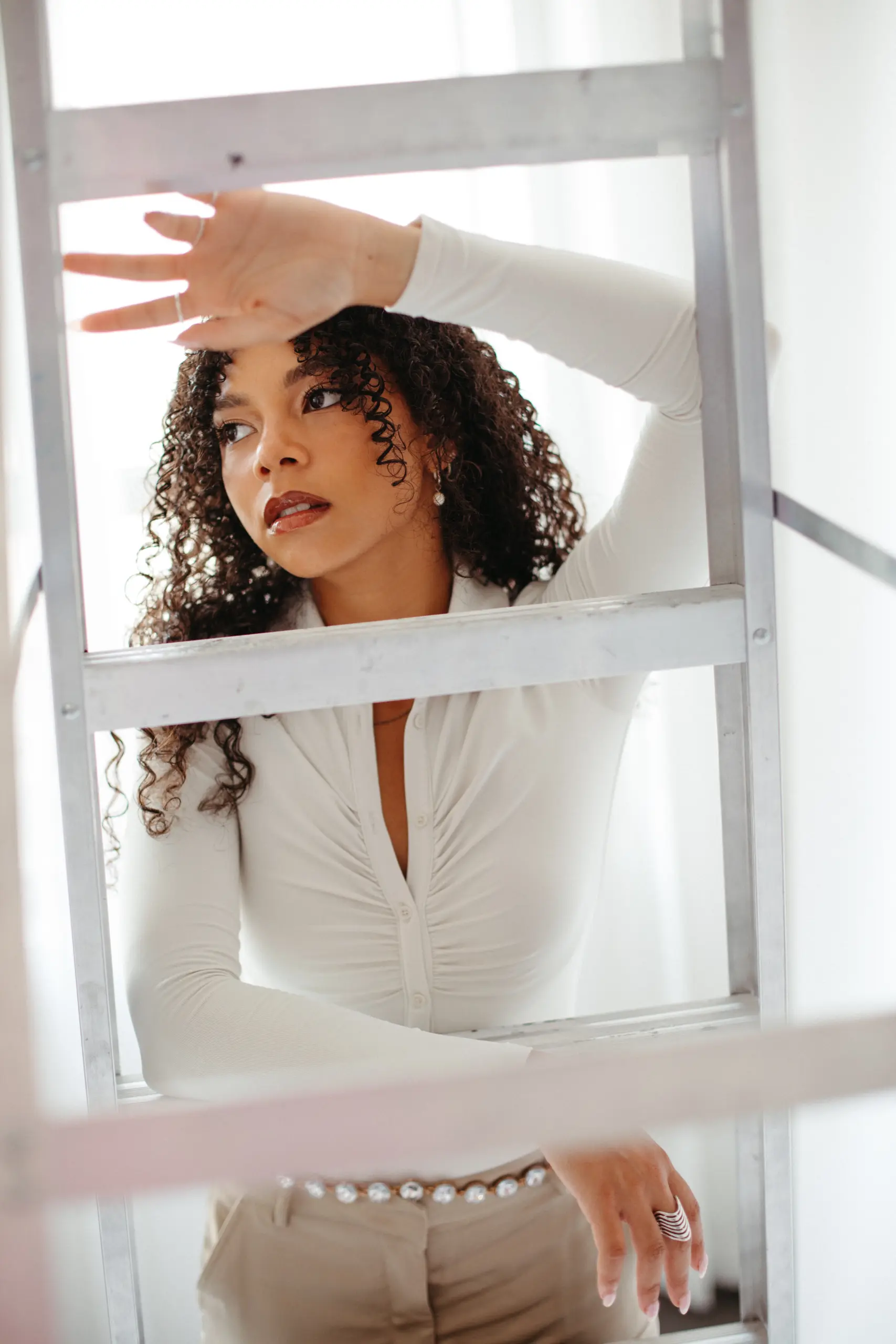
Ironically, starring in a show about children being pushed beyond their limits unlocked something in Simone’s musical life. “It’s been a while since I released any music,” she says. “The last time I put out a single, I was 17, and I’m days away from turning 20.” While filming The Institute, the writer’s block that had stalked her for years loosened its grip. “I was so creatively inspired on set. I’d get home and be bubbling over with ideas,” she says. “On my days off, I perpetually sat at my piano, working out new melodies and lyrics.”
The songs arriving this October are different – in genre and in vulnerability. “It’s more honest and raw than my other music,” she says. “Being an artist in music is different to acting. With acting, you can put up a wall. Not a [literal] wall, but it’s not as personal. It’s not your words or your stories. With music, you’re fully spewing your heart out to anybody who wants to listen.”
She doesn’t sugarcoat her feelings. “It’s daunting to have very personal, intimate stories – things you might’ve taken to the grave – displayed so publicly,” she says. “I’m terrified, but I’m really proud of myself for allowing myself to dive this deep and share on this level. I hope people identify with my stories.”
Between new songs and new scripts, she keeps a mantra close, with advice for anyone following in her footsteps. Don’t “be overly apologetic for taking up space that you earned,” she says. “If I’m cast, I did something right. Nerves just mean you care.”
As for what’s next, The Institute continues to introduce Kalisha’s grit to global audiences, while October’s music marks a new chapter that is riskier, rawer, and closer to the bone. Beyond that, the goal is simple and ambitious: to keep telling stories – on screen, in song, and eventually from the director’s chair – that let more people see themselves reflected with care.
Simone Miller’s rise isn’t about algorithms or overnight virality. It’s about learning to hold your nerve in audition rooms, on set, online, and at the piano. It’s about admitting fear and then telling the story anyway. The industry will keep shifting, the headlines will keep spinning, the comment sections will keep commenting. But the work, and the person doing it, can stay steady.
“Do your best,” she says again, advising anyone wanting to follow in her footsteps. “If it works out, great. If it doesn’t, it’s making room for something better.”

Author: Gabriella Wieland
Gabriella Wieland is a writer and English Literature graduate. She spends most of her time trying to keep her mini-poppadom obsession at bay and finding adventures of the ‘free’ variety. Residing in Manchester, she also spends much of her time liaising with scientists to find a geographical cure for eternally-grey skies and Vitamin D deficiency.